The Mathematics of the Divine
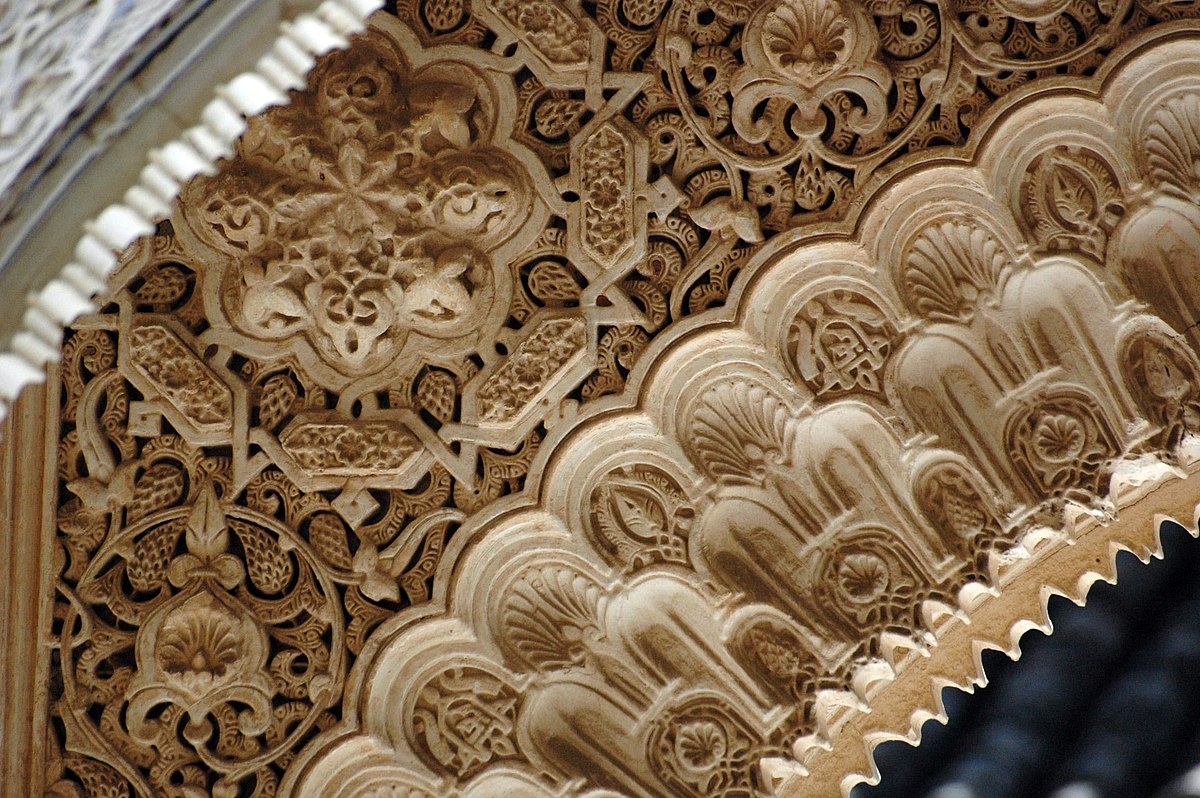
Walk into any great Islamic building — a mosque, a madrasa, a palace — and you enter a world governed by geometry. Stars unfold from simple shapes, patterns tessellate across vast surfaces without repetition, and the eye is drawn ever inward toward a complexity that seems to approach the infinite. This is sacred geometry: the art of revealing divine order through mathematical harmony.
The foundations of Islamic geometric art lie in simple tools: a compass and a straightedge. From these humble instruments, master craftsmen created patterns of extraordinary sophistication. Beginning with basic constructions — the circle, the square, the hexagon — they developed techniques for generating patterns of ever-increasing complexity.
The five-pointed star and the ten-pointed star are among the most iconic motifs in Islamic geometry. These shapes, based on the geometry of the pentagon, embody proportions related to the golden ratio — a mathematical constant that appears throughout nature, from the spiral of a seashell to the branching of a tree.
The Ben Youssef Madrasa in Marrakech, Morocco, exemplifies the integration of geometric pattern into architectural space. Every surface — walls, floors, ceilings — is adorned with intricate carved stucco, zellige tilework, and cedar wood carving, creating an immersive environment where geometry becomes a total experience.
The Taj Mahal in Agra, India, represents the pinnacle of Mughal Islamic architecture. Its perfect symmetry, elegant proportions, and masterful use of geometric inlay (pietra dura) create a building of transcendent beauty. The monument demonstrates how Islamic architectural principles could be adapted to create works of universal appeal.
In our modern age, Islamic geometric patterns have found new life through digital tools and computational design. Yet the essential impulse remains the same: to create beauty that points beyond itself, to reveal the hidden order that underlies the apparent chaos of the world, and to remind us that mathematics and spirituality are not opposing forces but complementary paths to understanding.