A Monument of Eternal Love
The Taj Mahal, commissioned in 1632 by Mughal Emperor Shah Jahan as a mausoleum for his beloved wife Mumtaz Mahal, is widely regarded as the finest example of Mughal architecture — a fusion of Indian, Persian, and Islamic design traditions that created something the world had never seen before.
The building took approximately 22 years to complete, employing over 20,000 artisans from across the Mughal Empire and beyond. Master calligraphers, stone carvers, inlayers, and dome builders worked together to create a monument of breathtaking harmony and beauty.
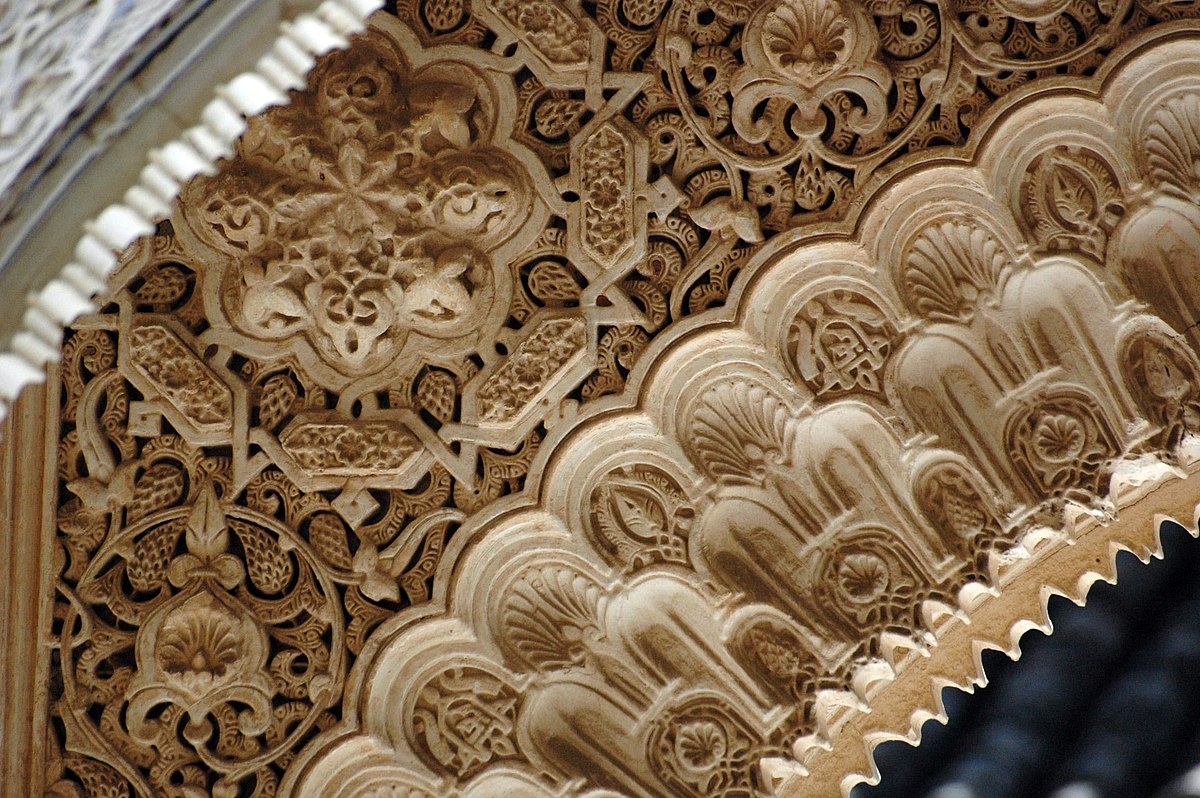
The Taj Mahal's design embodies key principles of Islamic architecture: perfect bilateral symmetry, the use of the garden as a symbol of paradise (the Charbagh tradition), and the integration of calligraphy into the architectural fabric. Quranic verses are inscribed around the great arched portals, their script carefully scaled to appear the same size from ground level — a remarkable optical and mathematical achievement.
The pietra dura inlay work is among the finest ever created. Semi-precious stones — cornelian, lapis lazuli, jasper, and jade — are set into the white marble with such precision that the joints are invisible to the naked eye. Floral patterns of extraordinary delicacy transform the cold stone into gardens of perpetual bloom.
The Mughal architectural tradition extended far beyond the Taj Mahal. From the Red Fort in Delhi to the Pearl Mosque in Lahore, from the Shalimar Gardens to the Badshahi Mosque, the Mughals created a built environment of remarkable beauty and sophistication that continues to define the cultural landscape of South Asia.
Today, the Taj Mahal draws millions of visitors annually, standing as a UNESCO World Heritage Site and one of the New Seven Wonders of the World. It reminds us that the deepest human emotions — love, loss, devotion — can find their most powerful expression in the language of architecture and art.