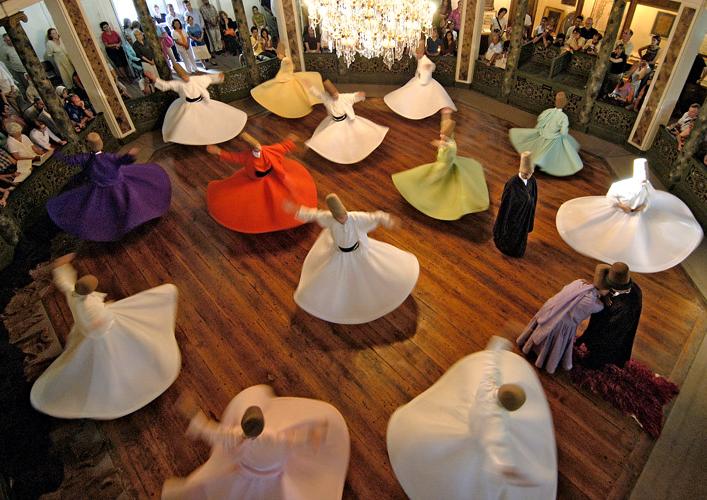
The Sacred Dance of the Mevlevi Order
In the city of Konya, Turkey, a remarkable spiritual tradition has flourished for over seven centuries. The Mevlevi Order, founded by the followers of the great Sufi poet Jalaluddin Rumi, practices a form of active meditation known as the Sema — the sacred whirling ceremony that has captivated observers throughout history.
The Sema is far more than a dance; it is a form of dhikr (remembrance of God) expressed through movement. Each element of the ceremony carries deep symbolic meaning. The tall felt hat (sikke) represents the tombstone of the ego, while the white robe symbolizes the ego's shroud. When dervishes remove their dark cloaks to reveal the white beneath, they symbolize spiritual rebirth.
As the dervishes begin to whirl, their right hands face upward to receive divine grace, while their left hands face downward to transmit this blessing to the earth. The rotation around their own axis mirrors the revolution of all things in creation around the divine center.
The music that accompanies the Sema is itself a profound spiritual expression. The haunting sound of the ney (reed flute) represents the human soul's longing for reunion with the Divine — a theme that Rumi explored extensively in the opening lines of his masterwork, the Masnavi: 'Listen to the reed, how it tells a tale, complaining of separations.'
Today, the Mevlevi Sema ceremony is recognized by UNESCO as a Masterpiece of the Oral and Intangible Heritage of Humanity. While it can be witnessed as a cultural performance, for practitioners it remains a deeply personal spiritual practice — a living connection to the mystical tradition of Sufi Islam.
The whirling of the dervishes reminds us that the spiritual life is not passive contemplation alone, but can also be found in joyful, ecstatic movement — the whole being engaged in the celebration of divine love.